

Cucumbers
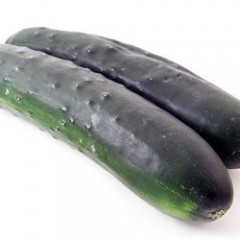 In 2011 there were approximately 3,000 acres of cucumbers grown in New York worth $19 million (2011 Vegetable Summary). The majority of this production is for fresh consumption, including small scale retail operations, as well as wholesale production to serve larger markets throughout the Northeast U.S. In addition to open field production cucumbers are increasingly grown inside greenhouses and high tunnels. The crop, when unhindered by pests and diseases, can provide high yields within a short harvest window. Cucumber production in New York is increasingly under threat from the foliar disease Downy Mildew (Pseudoperonospora cubensis). Thus the Cornell Vegetable Program is collaborating with partners to conduct advanced on-farm research to enhance production and marketing of cucumbers, including the development of improved varieties suited for organic agriculture. Stay tuned for more information on this project. In the meantime check out results from our variety trials and grafting work with cucumbers below.
2025 Pumpkin Powdery Mildew Table
Chuck Bornt, Team Leader, Extension Vegetable Specialist
Eastern New York Commercial Horticulture
2025 Pumpkin and Winter Squash Pre-emergent Post Plant Herbicide Table
Chuck Bornt, Team Leader, Extension Vegetable Specialist
Eastern New York Commercial Horticulture
Organic Production Guides
Robert Hadad, Extension Vegetable Specialist
Cornell Vegetable Program

Organic Production Guides for fruits, vegetables and dairy are available through the NYS Integrated Pest Management (IPM) program. They outline general practices for growing vegetable and fruit crops using organic integrated pest management techniques.
2024 Cucurbit Powdery Mildew Fungicide Table
Chuck Bornt, Team Leader, Extension Vegetable Specialist
Eastern New York Commercial Horticulture
Reminder on Calculating Fertigation Rates for Plastic Mulches
Chuck Bornt, Team Leader, Extension Vegetable Specialist
Eastern New York Commercial Horticulture
2024 Cucurbit Downy Mildew Fungicide Table
Chuck Bornt, Team Leader, Extension Vegetable Specialist
Eastern New York Commercial Horticulture
2024 Post Emergent Grass Herbicides for Vine Crops
Chuck Bornt, Team Leader, Extension Vegetable Specialist
Eastern New York Commercial Horticulture
Angular Leaf Spot: Perennial Problem of Cucurbits
Teresa Rusinek, Vegetable Specialist
Eastern New York Commercial Horticulture
Cucurbit Weed Update
Chuck Bornt, Team Leader, Extension Vegetable Specialist
Eastern New York Commercial Horticulture
As many of you know, we don't have a whole lot of post-emergent herbicides at our disposal for cu-curbits, and those that we do have are more grass herbicides then broadleaf materials. However, halosulfuron (Sandea or Profine), which is also one of our main broadleaf pre-emergent, is labeled and can be quite effective if used properly. If you used either Sandea or Profine pre-emergent even with another pre-emergent, we again would expect to see a few weeds such as Common Lambquar-ters and Ragweed start to breakthrough our pre-emergent herbicide barrier.
Fungicides labeled for Cucurbit Downy Mildew
Chuck Bornt, Team Leader, Extension Vegetable Specialist
Eastern New York Commercial Horticulture
2020 Powdery Mildew Fungicide Table
Chuck Bornt, Team Leader, Extension Vegetable Specialist
Eastern New York Commercial Horticulture
Cucurbit Downy Mildew Fungicide Table
Chuck Bornt, Team Leader, Extension Vegetable Specialist
Eastern New York Commercial Horticulture
Guidelines on Managing Cucurbit Downy Mildew in 2020 Based on Recent Research
Cucurbit Downy Mildew Update
Chuck Bornt, Team Leader, Extension Vegetable Specialist
Eastern New York Commercial Horticulture
The wet weather coming up from the south is likely to be bringing Cucurbit Downy Mildew Spores with it. Read about control strategies in the full article, including revised recommended sprays.
Be on the Lookout for Cucumber Beetles!
Crystal Stewart-Courtens, Extension Vegetable Specialist
Eastern New York Commercial Horticulture
Thrips damage to High Tunnel Cucumbers
Amy Ivy, Vegetable Specialist
Eastern New York Commercial Horticulture

Thrips populations can explode, especially under the protective conditions in a high tunnel. Bio-controls can only help at the early stages, but there are a couple of other options for organic and conventional growers to try to bring this pest under control.
A Spring Tale of Springtails
Teresa Rusinek, Vegetable Specialist
Eastern New York Commercial Horticulture
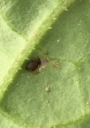
The springtail is a flea beetle lookalike that typically feeds on decaying plant material, but under certain conditions may attack crops such as cucurbits. These tiny insects have been seen in several locations this past week feeding on cucumbers and garlic.
Responding to Hailstorms 2018
Crystal Stewart-Courtens, Extension Vegetable Specialist
Eastern New York Commercial Horticulture
The fierce storm that hit much of the Eastern New York region south of Albany on Wednesday, May 15, 2018 caused tremendous wind, water, and hail damage. For growers wondering how to respond to hail damage to young plants, read more about how to best protect your crops.
LandSpring NYS Label
Chuck Bornt, Team Leader, Extension Vegetable Specialist
Eastern New York Commercial Horticulture
2018 Eastern New York Fruit & Vegetable Conference Vegetable Presentations

Presentations from the 2018 ENYCHP Eastern New York Fruit & Vegetable Conference held February 20th and 21st for the vegetable sections.
Zonix Biofungicide Label
Timorex Gold NYS Label
2015 Cucumber Variety Slideshow!
Crystal Stewart-Courtens, Extension Vegetable Specialist
Eastern New York Commercial Horticulture

Cucumbers in High Tunnels
Amy Ivy, Vegetable Specialist
Eastern New York Commercial Horticulture

Cucumbers are an excellent high tunnel crop for spring, summer and fall production in New York State. Grown vertically, cucumbers take advantage of the space and light offered by a high tunnel. Cucumbers grown in this environment are of higher quality with higher yields. Very fast growing and yielding, they fit into crop plans that include winter greens easier than tomatoes, peppers or eggplants.
Responding to Hailstorms
Crystal Stewart-Courtens, Extension Vegetable Specialist
Eastern New York Commercial Horticulture

While no one wants to think about the possibility of hail hitting their beautiful crops just as they start to respond to the heat and take off, the likelihood that we will see more hail seems pretty high. So let's talk about it.
Phytophthora Webinar 3: Management practices to reduce P-Cap on the farm

This recorded webinar features Dr. Meg McGrath for a discussion of fungicides for P-Cap, crop rotation strategies, and the use of biofumigants to control P-Cap in infected fields.
Webinar: How do I know if I have P-Cap in my Fields?
Laura McDermott, Team Leader, Small Fruit and Vegetable Specialist
Eastern New York Commercial Horticulture
The first in a 3-part series, this pre-recorded webinaris presented by Dr. Chris Smart, Cornell University.
Flooding in 2011 spread Phytophthora capsici into fields with no history of the disease. Growers who have not managed P. capsici previously could inadvertently and permanently spread the disease to additional fields and could experience high rates of crop loss due to improper management of the disease. Understanding of P. cap will reduce the probability of these negative outcomes on eastern NY farms.
Webinar: How do I know if I have P-Cap in my Fields?
Laura McDermott, Team Leader, Small Fruit and Vegetable Specialist
Eastern New York Commercial Horticulture
The first in a 3-part series, this pre-recorded webinaris presented by Dr. Chris Smart, Cornell University.Â
Flooding in 2011 spread Phytophthora capsici into fields with no history of the disease. Growers who have not managed P. capsici previously could inadvertently and permanently spread the disease to additional fields and could experience high rates of crop loss due to improper management of the disease. Understanding of P. cap will reduce the probability of these negative outcomes on eastern NY farms.
Webinar: Farming with P-Cap: Managing Your Crops and Minimizing Spread
Laura McDermott, Team Leader, Small Fruit and Vegetable Specialist
Eastern New York Commercial Horticulture

In this pre-recorded webinar, Dr. Michael Mazourek, plant breeder at Cornell University, and Dr. Chris Smart, plant pathologist at Cornell University Geneva Experiment Station lead a discussion about how to minimize the impact of Phytophthora capsici on your farm.
Greenhouse Cucumber Variety Trial (2011)
Judson Reid, Extension Vegetable Specialist
Cornell Vegetable Program

The unheated greenhouse, or high tunnel, offers a vertical production environment suitable for crops such as indeterminate tomatoes and cucumbers. As it is a soil based system however, and passively heated, greenhouse cucumbers must be transplanted later in the spring than tomatoes, due to their intolerance for low root zone temperatures. However, cucumbers can provide good returns when grown in a high tunnel, given consistent pest control and matching variety performance with market demand. A variety trial of four greenhouse cucumbers was established in a cooperating high tunnel in the spring of 2011.
Buckwheat Strips as an Attractant of Pollinators for Vine Crops
Robert Hadad, Extension Vegetable Specialist
Cornell Vegetable Program

Download a report on using buckwheat strips to attract native pollinators to vine crops (2008). This project was funded by the Organic Farming Research Federation.
Grafting Cucumbers in High Tunnels
Judson Reid, Extension Vegetable Specialist
Cornell Vegetable Program

Soil based greenhouse and high tunnel production of vegetables has risen dramatically in New York recently. This season extension technology offers farmers an opportunity to target market price peaks and capitalize on rising demand for locally grown produce. Considerable attention has been given, justifiably, to tomatoes in these settings. Trials by the Cornell Vegetable Program confirm that cucumbers can also be grown at a profit in tunnels.
As production continues in the same soil beds, risk of root-zone diseases and soil nutrient deficiencies increase. Grafting, the combination of two separate cultivars into one plant, could be a solution to these challenges. Evaluations of grafted tomato by the Cornell Vegetable Program revealed several advantages. This project endeavored to graft cucumbers onto a fig leaf gourd (Cucurbita ficifolia) for increased yields and cold hardiness.


Apples

Apricots

Asparagus

Beets

Blueberries

Broccoli

Brussels Sprouts

Cabbage

Carrots

Cauliflower

Cherries

Cucumbers

Dry Beans

Eggplant

Ethnic Vegetables

Garlic

Grapes

Horseradish

Kohlrabi

Leeks

Lettuce / Leafy Greens

Melons

Nectarines

Onions

Parsnips

Peaches

Pears

Peas

Peppers

Plums

Potatoes

Pumpkins / Gourds

Radishes

Raspberries / Blackberries

Rhubarb

Rutabaga

Snap Beans

Squash - Summer

Squash- Winter

Strawberries

Sweet Corn

Sweet Potatoes

Tomatoes

Turnips

Upcoming Events
Leading the Farm Team: Supervisory Skills for New Managers
April 14, 2026 : Session 1: Becoming a Supervisor
The transition from working alongside employees to supervising them can be challenging. This session explores the shift from individual contributor to supervisor and the mindset and skills needed to lead a team effectively. Participants will learn about the role of a supervisor, key leadership behaviors, and how to build trust and credibility with employees.
April 21, 2026 : Session 2: Improving Performance
This session will introduce the performance triad—clear expectations, training, and feedback—to support employee success. We will discuss practical communication strategies, how to give constructive feedback, and how supervisors can help employees improve their performance over time.
April 28, 2026 : Session 3: Managing Conflict
Supervisors are responsible for maintaining a professional and respectful workplace. This session covers some of the legal and ethical responsibilities of supervisors and the responsibilities managers have in addressing workplace concerns.
Participants will also explore common sources of workplace conflict, learn to recognize potential biases that can influence management decisions, and discuss practical approaches for addressing difficult situations and resolving conflicts at work.