

Managing Anthracnose Fruit Rot of Blueberries
Laura McDermott, Team Leader, Small Fruit and Vegetable Specialist
Eastern New York Commercial Horticulture
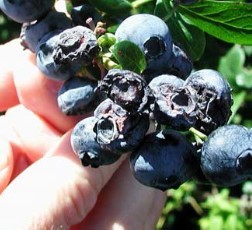
Anthracnose (Colletotrichum acutatum) is a serious pre- and post-harvest fruit rot in most blueberry growing regions. The flowers are infected early in the spring. Cane, twig, and leaf lesions are more sporadic.
Symptom: The fruit rot manifests itself as sunken areas on ripe fruit with gelatinous, orange spore masses. On young canes, lesions are dark brown with fruiting bodies in concentric circles. On twigs, dark brown lesions may originate from infected buds and kill part of the twig. On the leaves, lesions look reddish brown with distinct borders. Salmon-pink spore masses may appear on infected tissues under humid conditions.
Disease cycle: The fungus overwinters in infected twigs, old fruiting spurs and live buds. In spring and summer, spores produced on infected tissues are dispersed by rain and cause new infections. Spores are released between bloom and early fruit development. Prolonged wetness (12 hours or more) and temperatures of 68-77ºF (20-25ºC) promote disease development. Fruit infections remain latent until the fruit starts to ripen or until after harvest.
Management: Prune out old or infected wood; create an open canopy to reduce humidity and increase spray penetration; plant resistant cultivars; limit overhead irrigation; harvest in a timely manner; cool fruit rapidly after harvest; apply effective fungicides from pink bud to harvest. Abound, Serenade Max, Bravo, Captevate are just a few of them. Double Nickel has some efficacy for organic growers. If you are spraying for mummyberry you will likely take care of anthracnose. To prevent recurrence the following year, make sure to apply petal fall spray. For additional materials that are labelled in NYS, refer to your 2018 Cornell Berry Pest Management Guidelines. Photos were taken by C. Heidenreich, Cornell University. Additional information can be obtained through Michigan State University fact sheet
This article was printed in the May 24th issue of the CCE ENYCHP Berry News. To view the full newsletter click here.


Apples

Apricots

Asparagus

Beets

Blueberries

Broccoli

Brussels Sprouts

Cabbage

Carrots

Cauliflower

Cherries

Cucumbers

Dry Beans

Eggplant

Ethnic Vegetables

Garlic

Grapes

Horseradish

Kohlrabi

Leeks

Lettuce / Leafy Greens

Melons

Nectarines

Onions

Parsnips

Peaches

Pears

Peas

Peppers

Plums

Potatoes

Pumpkins / Gourds

Radishes

Raspberries / Blackberries

Rhubarb

Rutabaga

Snap Beans

Squash - Summer

Squash- Winter

Strawberries

Sweet Corn

Sweet Potatoes

Tomatoes

Turnips

Upcoming Events
Introduction to Small Fruit Workshop

September 21, 2026
Millbrook, NY
Join Cornell Cooperative Extension of Dutchess County for a presentation on small fruit establishment, production, and management with ENYCHP's Berry Specialist Heather Kase!