Eastern New York Commercial Horticulture Enrollment

Program Areas

  • Food Safety
  • Variety Evaluation
  • Market Development
  • Pest Management
  • Cultural Practices

Enrollment Benefits

  • Telephone / Email Consultations
  • Newsletter
  • Direct Mailings
  • Educational Meetings & Conferences
  • In-Field Educational Opportunities
  • On-Farm Research Trials

ENYCH Enrollment Form (PDF; 331KB)

Enrollee Login

Password:

Log In To Access:

  • Helpful Diagnostic Tool:
      What's wrong with my crop?

Not an Enrollee? Enroll Now!

Online Enrollment Form

Cranberry and Cherry Fruit Worm
August 22, 2012

Cranberry and Cherry Fruit Worm

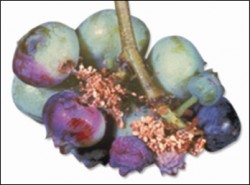
A number of growers have been calling with a question about blueberry clusters strung together with webbing or frass or both. Most people cannot find a larvae (although they are there!), but are alarmed with picker complaints. The pest in question is fruit worm either cranberry or cherry. Both insects have very similar life cycles and the damage is similar, but the chemical control materials differ slightly, so it will be important to be able to differentiate. 


The adult moths lay their eggs in late May and early June at the base of the newly set fruit. Larvae of both
species attack green fruit. There are sex pheromones  available for both pests and monitoring should begin in late April to optimize spray timing. Usually two sprays are necessary the first at petal fall and the second 10 days later. Organically approved materials include Entrust and Dipel DF. Other materials include Azasol, or Molt-X, Sevin, Malathion, Imidan, Esteem and Delegate, among others. 

Check the Guidelines for more control information and visit this site for fact sheets about fruitworms:  http://www.fruit.cornell.edu/berry/ipm/ipmpdfs/bbfruitworm.pdf



more crops
Apples

Apples

Apricots

Apricots

Asparagus

Asparagus

Beets

Beets

Blueberries

Blueberries

Broccoli

Broccoli

Brussels Sprouts

Brussels Sprouts

Cabbage

Cabbage

Carrots

Carrots

Cauliflower

Cauliflower

Cherries

Cherries

Cucumbers

Cucumbers

Dry Beans

Dry Beans

Eggplant

Eggplant

Ethnic Vegetables

Ethnic Vegetables

Garlic

Garlic

Grapes

Grapes

Horseradish

Horseradish

Kohlrabi

Kohlrabi

Leeks

Leeks

Lettuce / Leafy Greens

Lettuce / Leafy Greens

Melons

Melons

Nectarines

Nectarines

Onions

Onions

Parsnips

Parsnips

Peaches

Peaches

Pears

Pears

Peas

Peas

Peppers

Peppers

Plums

Plums

Potatoes

Potatoes

Pumpkins / Gourds

Pumpkins / Gourds

Radishes

Radishes

Raspberries / Blackberries

Raspberries / Blackberries

Rhubarb

Rhubarb

Rutabaga

Rutabaga

Snap Beans

Snap Beans

Squash - Summer

Squash - Summer

Squash- Winter

Squash- Winter

Strawberries

Strawberries

Sweet Corn

Sweet Corn

Sweet Potatoes

Sweet Potatoes

Tomatoes

Tomatoes

Turnips

Turnips

more crops

Upcoming Events

2026 Northeast Extension Fruit Consortium Winter Webinar Series

Event Offers DEC Credits

February 4, 2026 : Management of Up and Coming Strawberry Diseases in the Northeastern United States

Session 1: Management of Up and Coming Strawberry Diseases in the Northeastern United States


February 11, 2026 : Kiwiberry Production in the Northeast

Session 2: Kiwiberry Production in the Northeast


February 18, 2026 : Heat Mitigation- Sunburn and Fruit Coloring

Session 3: Heat Mitigation- Sunburn and Fruit Coloring


Event Offers DEC Credits

February 25, 2026 : The Dating Game- Updates in Lepidopteran Mating Disruption

Session 4: The Dating Game- Updates in Lepidopteran Mating Disruption


Event Offers DEC Credits

March 4, 2026 : USEPA Endangered Species Act Strategies and Pesticide Use

Session 5: USEPA Endangered Species Act Strategies and Pesticide Use


March 11, 2026 : Practical Drought Management for Fruit Growers

Session 6: Practical Drought Management for Fruit Growers

View 2026 Northeast Extension Fruit Consortium Winter Webinar Series Details

Managing the Invasive Swede Midge Webinar

Event Offers DEC Credits

March 6, 2026 : Managing the Invasive Swede Midge Webinar

Swede midge is an invasive fly that causes serious economic losses to brassica crops. Due to its small size and hidden feeding habits, swede midge is often called an "invisible pest" and damage may be misdiagnosed. In this webinar, we will review the swede midge life cycle and crop damage symptoms, current management recommendations, new research findings, and highlights from on-farm case studies with a focus on organic management. 

View Managing the Invasive Swede Midge Webinar Details

New Farm Manager Skills Day - Get the Tools You Need to Grow Your People (Hudson Valley)

March 10, 2026 : New Farm Manager Skills Day - Get the Tools You Need to Grow Your People
Millbrook, NY

Are you moving into a supervisory farm management role this season and want to get off to a good start?  Are you an experienced manager who wants to connect with other "people" managers and work on your skills?  This one-day workshop is for you! 

View New Farm Manager Skills Day - Get the Tools You Need to Grow Your People (Hudson Valley) Details

Announcements

Resources from CCE ENYCHP!


This website (https://enych.cce.cornell.edu/) contains our calendar of upcoming programs and registration links. For updated programmatic information, technical resources and links to newsletters please see our program blog site: https://blogs.cornell.edu/enychp/.
We also maintain the following online resources that you can view directly from these links:

• CCE ENYCH YouTube (program videos): https://www.youtube.com/channel/UCSk_E-ZKqSClcas49Cnvxkw

• CCE ENYCH Facebook (program social media): https://www.facebook.com/CCEENYCHP/

• CCE ENYCH Instagram (program social media): https://www.instagram.com/cceenychp/?hl=en


NEWSLETTERS  |   CURRENT PROJECTS  |   IMPACT IN NY  |   SPONSORSHIP  |   RESOURCES  |   SITE MAP