Can it be True?
Chuck Bornt, Team Leader, Extension Vegetable Specialist
Eastern New York Commercial Horticulture
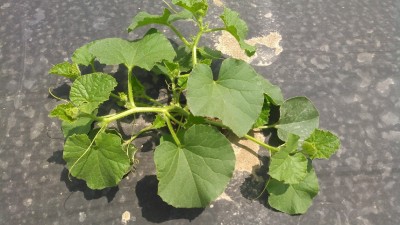
As you know, new products for enhancing growth are coming onto the market every year and we do our best to bring you what we know from reputable sources. Last week in reviewing some other newsletters that I subscribe to I ran across an article by Dr. Gordon Johnson, Extension Vegetable & Fruit Specialist, University of Delaware in regards to a product labeled to aid in reducing transplant shock in certain vegetables called LandSpring made by AgroFresh. I looked up the product in the NYS DEC database to make sure that it is labeled in NY and it is. There are PPE and WPS requirements so be sure to review the label carefully. This product is also incompatible with copper products. The label is also very specific with agitation and making sure that the material is applied within 15 minutes of final agitation. Other considerations from the label:
· When mixing, agitate or stir gently for 3 minutes after adding the LandSpring WP. DO NOT EXCEED 3 MINUTES OF AGITATION. Do not use agitator during spraying.
· Initiate spray application as soon as possible after mixing and no later than 15 minutes after preparation of tank mixture.
· Spray Volume - apply LandSpring WP in a sufficient amount of water to ensure good drenching of the seedlings. Product efficacy requires that the foliage receive uniform spray coverage.
· For best results, apply under slow drying conditions, e.g. early in the morning or at night, in order to ensure adequate absorption.
· Do not apply if rain or overhead irrigation is expected within 1 hour of application.
· LandSpring WP has a 1 day preharvest interval (PHI
· Apply LandSpring WP alone on seedlings, without tank mixes or adjuvants
If you apply it and I've linked the label here to our website: LandSpring label and below is the article from Dr. Johnson (source: Weekly Crop Update, April 27, 2018, , Volume 26, Issue 5)
New Technology for Reducing Transplant Shock by Dr. Gordon Johnson - A new tool is available for reducing transplant shock. The chemical 1-methylcyclopropene (1-MCP) which is marketed as the product LandSpring by the AgroFresh company reduces ethylene production and stress on young plants.
Ethylene in the plant hormone released when plants are injured or are under stress, as is common during transplanting. Excess ethylene can cause leaf drop and wilting and can increase transplant losses.
The way 1-MCP works is that it has a similar molecular structure to ethylene but without the negative effects on the plant. It binds to ethylene receptors in the plant and thus blocks ethylene from causing damage.
LandSpring is labelled on broccoli, brussel sprouts, cabbage, cantaloupe, cauliflower, cucumber, eggplant, muskmelon, bell pepper, nonbell pepper, summer squash, tomato and watermelon. According to the company "When applied to seedlings 1 - 5 days before transplanting, LandSpring WP helps decrease transplant shock enabling plants to more rapidly establish and grow. Observed benefits include increased crop biomass due to better root and shoot development when plants are subjected to stress.in the weeks following transplantation. More information can also be found at: http://www.landspring.info/
This article is from the May 3, 2018 edition of ENYCHP Vegetable News. To read the full newsletter,CLICK HERE.


Apples

Apricots

Asparagus

Beets

Blueberries

Broccoli

Brussels Sprouts

Cabbage

Carrots

Cauliflower

Cherries

Cucumbers

Dry Beans

Eggplant

Ethnic Vegetables

Garlic

Grapes

Horseradish

Kohlrabi

Leeks

Lettuce / Leafy Greens

Melons

Nectarines

Onions

Parsnips

Peaches

Pears

Peas

Peppers

Plums

Potatoes

Pumpkins / Gourds

Radishes

Raspberries / Blackberries

Rhubarb

Rutabaga

Snap Beans

Squash - Summer

Squash- Winter

Strawberries

Sweet Corn

Sweet Potatoes

Tomatoes

Turnips