Navigating the NYS DEC: How to Get Your Certified Pesticide Applicator License
Jim O'Connell, Small Fruit and Grape Specialist
Eastern New York Commercial Horticulture
As a grape grower in the Northeast, one of your biggest challenges is combating the insects, diseases, and other pests invading your vineyard. Although you do not need a license to purchase or use some pesticides, obtaining your certified pesticide applicator license will give you access to more materials that you can add to your pest combatting-arsenal.
Do I need a license?
Pesticides are divided into two groups:
General use pesticide: A pesticide that may be purchased and used by the general public.
Restricted use pesticide (RUP): Only certified pesticide applicators are allowed to buy these materials, and only certified applicators or persons under their direct supervision may apply them.
Long story short, to apply RUPs you will need a certified pesticide applicator license.
What type of license do I need?

How do I get my license?
First, make sure you meet the requirements
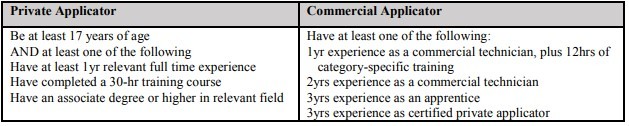
If you need a commercial license, but do not meet the requirements, you can be a technician or apprentice first, then upgrade to certified applicator later. (Requirements on the NYS DEC Website)
Technician: may use most general use pesticides without direct supervision and RUPs under direct supervision of a certified commercial pesticide applicator. May NOT supervise.
Apprentice: a person engaged in commercial application of pesticides but does not meet the technician or certified applicator requirements.
Next, take the appropriate exam.

Find your DEC region here: https://www.dec.ny.gov/about/558.html
Find an exam here (search by region): http://www.dec.ny.gov/nyspad/find?1&tab=EXAMS
To pass the exam, study the CORE and Category Manuals. You can purchase them here: https://www.cornellstore.com/books
How do I maintain my license?
After receiving your pesticide applicator license, you'll have to maintain it by proving you are continuing to get updated education on proper use of pesticides. You can do this by earning recertification credits or by taking the recertification exam at the end of your certification cycle.

All of the information above on how to obtain and maintain a license is available in more detail on the NYS DEC website http://www.dec.ny.gov/permits/45618.html
Your regional DEC person welcomes any questions you have as you navigate the application process. Information on the DEC Regions website https://www.dec.ny.gov/about/558.html


Apples

Apricots

Asparagus

Beets

Blueberries

Broccoli

Brussels Sprouts

Cabbage

Carrots

Cauliflower

Cherries

Cucumbers

Dry Beans

Eggplant

Ethnic Vegetables

Garlic

Grapes

Horseradish

Kohlrabi

Leeks

Lettuce / Leafy Greens

Melons

Nectarines

Onions

Parsnips

Peaches

Pears

Peas

Peppers

Plums

Potatoes

Pumpkins / Gourds

Radishes

Raspberries / Blackberries

Rhubarb

Rutabaga

Snap Beans

Squash - Summer

Squash- Winter

Strawberries

Sweet Corn

Sweet Potatoes

Tomatoes

Turnips