

Allium Leafminer Active in Southern Pennsylvania
Teresa Rusinek, Vegetable Specialist
Eastern New York Commercial Horticulture
A new invasive insect pest in the Northeast known as the Allium leafminer (ALM), Phytomyza gymnostoma, damages crops in the Allium genus (e.g., onion, garlic, leek, scallions, shallots, and chives) and is considered a major economic threat to Allium growers. Originally from Europe, ALM was first detected in Lancaster County, Pennsylvania in December of 2015 and in New Jersey and New York in 2016. As of fall 2017, ALM activity has been confirmed throughout eastern Pennsylvania, New Jersey, Delaware, southeastern New York as well as Tompkins and Suffolk counties.
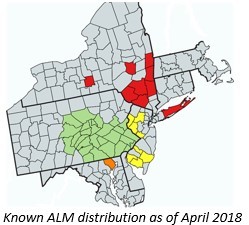
ALM is currently active in Lancaster, PA where the first signs of adult fly emergence were detected on April 13, 2018. Based on our observations from last spring in the Hudson Valley, we expect emergence in our area in the next week or so. ALM will continue to emerge, feed and lay eggs in alliums over about 4 weeks. Leaf mining from larvae will begin to show up within two weeks after first adult emergence and intensify over the duration of the flight. The larvae mine their way toward the base of the allium plant where they will pupate.
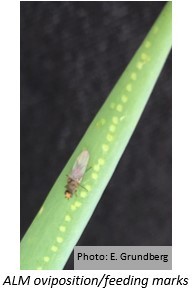
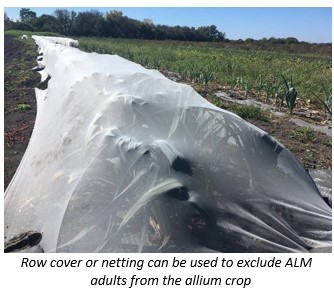
Growers who have alliums with green tissue growing in the field or in high tunnels now in southeastern New York should consider protective measures soon, especially in Orange, Ulster, Dutchess, Columbia, Sullivan, and Schoharie counties where significant infestations were observed last year. If you have small plantings that can be covered with row cover to exclude emerging ALM flies, now is the time to do so as long as you didn't have infested alliums (including wild onion grass) in the same space last season. Growers with larger plantings may consider applications of insecticides if and when significant ALM activity is observed in the allium crop. There are both organic and conventional insecticides labeled for allium crops to control this type of leafminer. Insecticide efficacy tests are currently being conducted in both New York and Pennsylvania. It is important to carefully observe your allium crops over the next few weeks. ALM oviposition/feeding may initially be observed along field edges. Be vigilant and please call or email either Teresa Rusinek at 845 389-3562, tr28@cornell.edu or Ethan Grundberg at 617 455-1893, eg572@cornell.edu if you see evidence of ALM feeding or have any questions about management.


Apples

Apricots

Asparagus

Beets

Blueberries

Broccoli

Brussels Sprouts

Cabbage

Carrots

Cauliflower

Cherries

Cucumbers

Dry Beans

Eggplant

Ethnic Vegetables

Garlic

Grapes

Horseradish

Kohlrabi

Leeks

Lettuce / Leafy Greens

Melons

Nectarines

Onions

Parsnips

Peaches

Pears

Peas

Peppers

Plums

Potatoes

Pumpkins / Gourds

Radishes

Raspberries / Blackberries

Rhubarb

Rutabaga

Snap Beans

Squash - Summer

Squash- Winter

Strawberries

Sweet Corn

Sweet Potatoes

Tomatoes

Turnips

Upcoming Events
Introduction to Small Fruit Workshop

September 21, 2026
Millbrook, NY
Join Cornell Cooperative Extension of Dutchess County for a presentation on small fruit establishment, production, and management with ENYCHP's Berry Specialist Heather Kase!