

O-zone Injury on Vegetables
Crystal Stewart-Courtens, Extension Vegetable Specialist
Eastern New York Commercial Horticulture
August 22, 2012
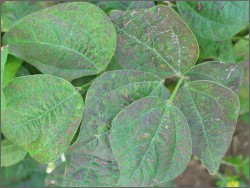
Common ozone symptoms are small, irregular, shaped spots that range in color from dark brown to black (stipple like) or light tan to white (fleck like). These spots are found only on the upper surface of the leaf. Very young and old leaves are less susceptible to ozone while newly mature leaves are the most susceptible. With severe damage, symptoms may extend to the lower leaf surface.
Insect feeding (red spider mite and some leafhoppers) produce flecks on the upper surface of leaves, much like ozone injury. Flecks from insect feeding are usually spread uniformly over the leaf surface while ozone flecks are concentrated in specific areas, usually most pronounced at the leaf tip and along the margins.
The most sensitive crops include: Bean, Broccoli, Muskmelon, Onion, Potato, Radish, Spinach, Sweet Corn, Tomato
Intermediate crops include: Carrot, Endive, Parsley, Parsnip, Turnip
Tolerant crops include: Beet, Cucumber, Lettuce


Apples

Apricots

Asparagus

Beets

Blueberries

Broccoli

Brussels Sprouts

Cabbage

Carrots

Cauliflower

Cherries

Cucumbers

Dry Beans

Eggplant

Ethnic Vegetables

Garlic

Grapes

Horseradish

Kohlrabi

Leeks

Lettuce / Leafy Greens

Melons

Nectarines

Onions

Parsnips

Peaches

Pears

Peas

Peppers

Plums

Potatoes

Pumpkins / Gourds

Radishes

Raspberries / Blackberries

Rhubarb

Rutabaga

Snap Beans

Squash - Summer

Squash- Winter

Strawberries

Sweet Corn

Sweet Potatoes

Tomatoes

Turnips

Upcoming Events
Introduction to Small Fruit Workshop

September 21, 2026
Millbrook, NY
Join Cornell Cooperative Extension of Dutchess County for a presentation on small fruit establishment, production, and management with ENYCHP's Berry Specialist Heather Kase!