

Low, Quick, and Caterpillar Tunnels: An Overview of Season Extension Techniques
Robert Hadad, Extension Vegetable Specialist
Cornell Vegetable Program
Last Modified: January 24, 2013
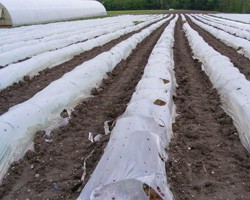
There are many styles and types of construction available on the internet. The ones mentioned in this presentation cover what is commonly available. Many suppliers carry hoop materials, row covers, and greenhouse film. Ingenuity and imagination creates more effective ways of set up and operation.
The caterpillar example in this presentation is based on low-cost materials. The tunnel is not recommended for handling snow loads. One problem found with it is that rain water can pool pockets of the greenhouse film between the cord/rope. This would require daily observations to push the water out so as not to cause bending of the hoops. Use of the tunnel should be for the extension of the season or getting an earlier start of the season making it easier to work inside. In order for the tunnel to stand up to the winter, daily maintenance is required.
A heavy duty version of the caterpillar tunnel is shown in another presentation listed on this website. It uses chain link fence poles and offers year-round operation with the stronger construction.
Additional resources that may be helpful to you:
Resources and Supplies for Tunnel Construction (PDF; 196KB)
Diggin' Tunnels: Low, Quick, and Caterpillar Tunnels for Season Extension (pdf; 2108KB)


Apples

Apricots

Asparagus

Beets

Blueberries

Broccoli

Brussels Sprouts

Cabbage

Carrots

Cauliflower

Cherries

Cucumbers

Dry Beans

Eggplant

Ethnic Vegetables

Garlic

Grapes

Horseradish

Kohlrabi

Leeks

Lettuce / Leafy Greens

Melons

Nectarines

Onions

Parsnips

Peaches

Pears

Peas

Peppers

Plums

Potatoes

Pumpkins / Gourds

Radishes

Raspberries / Blackberries

Rhubarb

Rutabaga

Snap Beans

Squash - Summer

Squash- Winter

Strawberries

Sweet Corn

Sweet Potatoes

Tomatoes

Turnips

Upcoming Events
Champlain Valley Orchard Storage Meeting
August 26, 2026
Chazy, NY
Join various experts from Cornell and Cooperative Extension at an orchard storage meeting for the Champlain Valley in Chazy from 1 to 4PM on August 26th. Free to attend, however we do ask that you register ahead so we know how many people to expect.