Resource Guide for Organic Insect and Disease Management, Second Edition
Robert Hadad, Extension Vegetable Specialist
Cornell Vegetable Program
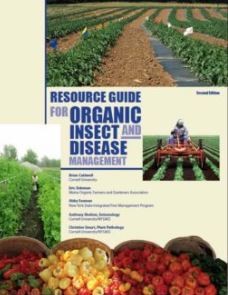
Organic farmers rely primarily on preventive, cultural and integrated methods of pest and disease management. However, there are a number of materials available for use that can complement and support organic management. This guide was developed to provide a useful and scientifically accurate reference for organic farmers and agricultural professionals searching for information on best practices, available materials and perhaps most importantly, the efficacy of materials that are permitted for use in organic systems. Many products available to organic farmers have not been tested extensively, and current research has not been summarized or made widely available to the general producer. A major objective of this guide has been to review recent literature for published trials on material efficacy in order to provide reliable information that can be used by farmers to effectively manage pests. Additionally, a goal was to identify what materials have shown promise but need more research.
Created with SARE support, you can download the Resource Guide for Organic Insect and Disease Management, Second Edition from Northeast Sustainable Agriculture Research and Education (SARE).

Upcoming Events
Eastern New York Grapevine Pruning Workshops - Highland
March 19, 2026 : Eastern New York Grapevine Pruning Workshop
Higland, NY
This workshop is ideal for anyone looking to learn or refresh their grapevine pruning skills.
2026 Cornell Winter Fruit Webinar Series
January 22, 2026 : Blueberry Pruning and Soil Health to Minimize Pests and Maximize Yield
Week 1: Blueberry Pruning and Soil Health to Minimize Pests and Maximize Yield
January 29, 2026 : Cost of Production for Fruit Crops
Week 2: Cost of Production for Fruit Crops - A new tool for tree fruit, updates on berry production in NY, and strategies for tracking and using expense data
February 12, 2026 : Fire Blight Management Updates
Week 3: Fire Blight Management Updates - Pathogen Biology, Defense Inducers, Biopesticides, and Pruning Therapies
February 19, 2026 : Pink and Petal Fall Insecticides- Can We Strike the Right Balance?
Week 4: Pink and Petal Fall Insecticides - Can We Strike the Right Balance?
March 12, 2026 : Inoculating Orchards with Mycorrhizal Fungi
Week 5: Inoculating Orchards with Mycorrhizal Fungi
March 19, 2026 : St. Peachtrick's Day - Cherry Pruning Strategies and Plum Varieties for the Northeast
Week 6: St. Peachtrick's Day - Cherry Pruning Strategies and Plum Varieties for the Northeast
Leading the Farm Team: Supervisory Skills for New Managers
April 14, 2026 : Session 1: Becoming a Supervisor
The transition from working alongside employees to supervising them can be challenging. This session explores the shift from individual contributor to supervisor and the mindset and skills needed to lead a team effectively. Participants will learn about the role of a supervisor, key leadership behaviors, and how to build trust and credibility with employees.
April 21, 2026 : Session 2: Improving Performance
This session will introduce the performance triad—clear expectations, training, and feedback—to support employee success. We will discuss practical communication strategies, how to give constructive feedback, and how supervisors can help employees improve their performance over time.
April 28, 2026 : Session 3: Managing Conflict
Supervisors are responsible for maintaining a professional and respectful workplace. This session covers some of the legal and ethical responsibilities of supervisors and the responsibilities managers have in addressing workplace concerns.
Participants will also explore common sources of workplace conflict, learn to recognize potential biases that can influence management decisions, and discuss practical approaches for addressing difficult situations and resolving conflicts at work.