

Early Season Garlic Fertility
Crystal Stewart-Courtens, Extension Vegetable Specialist
Eastern New York Commercial Horticulture
The most important time to make nitrogen available to a garlic plant in order to increase yield is shortly after leaf emergence from the ground. Success in providing optimal nitrogen will depend on the nitrogen source you are using and some well-timed assistance from soil biology.
Remember that the nitrogen cycle is driven by biology, and biology is driven by temperature (and soil health!). Organic matter is decomposed partially into ammonium by a suite of microbes before nitrification (see Figure 1 for a handy visual). As the soil warms, N that is bound in organic matter (slow release N) will be made available, and ammonium nitrogen will turn to nitrate nitrogen (Figure 2), which is easily taken up by plants.
Bare ground garlic growers can apply their nitrogen in the spring using a variety of sources including very soluble nitrate-nitrogen forms, because the plant will take up the fertilizer readily now. Our latest research is showing that garlic needs no more than 50 lbs/A of N applied in a spring sidedressing.
Nitrogen applied later in the growing cycle of garlic has very little if any effect on the final bulb size. So if you haven't applied your N yet, now is the time!
Figure 1: Nitrogen cycling, including organic and inorganic forms.
Figure 2: relationship of nitrification to soil temperature. As temperatures climb, nitrifying bacteria more quickly convert ammonia forms of N to nitrate forms, which are more plant available but also more prone to leaching.
This article is from the April 26, 2018 edition of ENYCHP Vegetable News. To read the full newsletter,CLICK HERE.
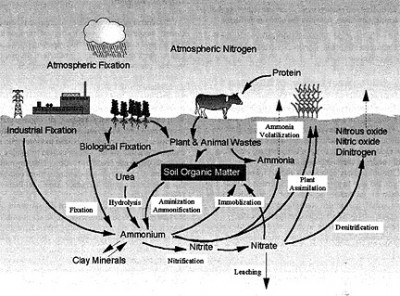
Figure 1
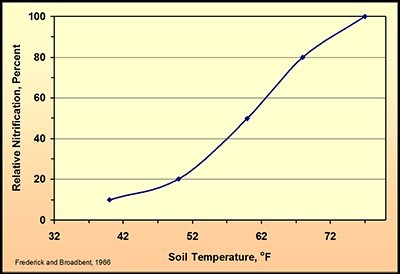
Figure 2


Apples

Apricots

Asparagus

Beets

Blueberries

Broccoli

Brussels Sprouts

Cabbage

Carrots

Cauliflower

Cherries

Cucumbers

Dry Beans

Eggplant

Ethnic Vegetables

Garlic

Grapes

Horseradish

Kohlrabi

Leeks

Lettuce / Leafy Greens

Melons

Nectarines

Onions

Parsnips

Peaches

Pears

Peas

Peppers

Plums

Potatoes

Pumpkins / Gourds

Radishes

Raspberries / Blackberries

Rhubarb

Rutabaga

Snap Beans

Squash - Summer

Squash- Winter

Strawberries

Sweet Corn

Sweet Potatoes

Tomatoes

Turnips

Upcoming Events
Capital Region Orchard Twilight Meeting

August 11, 2026
Rexford, NY
Join the ENYCHP and Cornell scientists on August 11 for the Capital Region Orchard Twilight meeting in Saratoga! We will be touring Bowman Orchards and reviewing seasonal recommendations for pests and diseases for apples, plums, and berries, as well discussing crop insurance.
NYSDEC Pesticide Applicator Recertification Credits: 1.25 in categories 22, 1A, & 10. Refreshments will be provided.
Free to attend, however we do ask that you register ahead so we know how many people to expect.
Champlain Valley Orchard Storage Meeting
August 26, 2026
Chazy, NY
Join various experts from Cornell and Cooperative Extension at an orchard storage meeting for the Champlain Valley in Chazy from 1 to 4PM on August 26th. Free to attend, however we do ask that you register ahead so we know how many people to expect.