

High Tunnel Tomatoes - Early Pruning Pays off
Amy Ivy, Vegetable Specialist
Eastern New York Commercial Horticulture
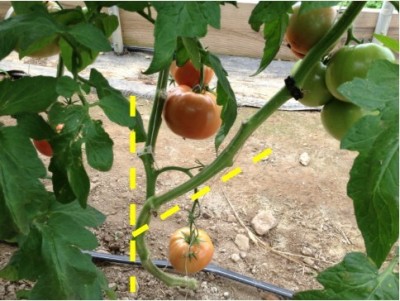
May is an insane time around any NY vegetable farm and it's a challenge to prioritize the mountain of tasks each day. But a little time spent pruning and training your high tunnel tomato plants now can really pay off later. Not only will they yield better, your labor will be more efficient during harvest since workers won't be plowing through a dense tangle of leafy stems to get to the tomatoes.
Here's a quick review:
Remove lower leaves up to the first fruit cluster. Bend the leaf up, then down and it should snap off cleanly, making quick work of this simple but important task. Why? It increases airflow around the plant to discourage disease and makes the plant easier to work around.
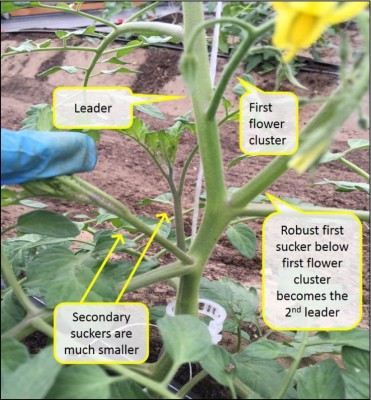
Strong Y - whether you are training determinate or double leader indeterminate (see below) start both with the Strong Y. See the photo to locate the weaker suckers to remove and the co-dominate sucker to keep just below the first flower cluster. Allow only the main leader and co-dominate leader to develop, removing all the other suckers and leaves up to this ‘Y' junction on the plant. Why? The lower suckers are less productive. Removing them sends the plant's food energy to the remaining stems, shoots and fruit.
Determinate tomatoes - train them to the ‘stake and weave' aka ‘Florida weave' system. Set a post between every 2-3 plants and start the horizontal twining early so the plants can grow up through the support. Why? This level of support will keep the aisles open for efficient worker movement and will keep the fruit up off the ground for easy harvest.
Indeterminate tomatoes - For large slicing tomatoes some growers prefer single leaders, some prefer double. When in doubt, the double leader system works well in most situations.
In our cherry tomato trial we found the double leader system was the best option in terms of labor efficiency and yield, compared to a single or multi leader system.
Check out these helpful factsheets for more photos and details:
- Training and Pruning Tomatoes: https://rvpadmin.cce.cornell.e...
- Tomatoes for High Tunnels: https://rvpadmin.cce.cornell.e...
- Cherry Tomatoes in High Tunnels: https://rvpadmin.cce.cornell.e...
- Optimal Spacing for High Tunnel Tomatoes: https://rvpadmin.cce.cornell.e...
This article is from the May 3, 2018 edition of ENYCHP Vegetable News. To read the full newsletter,CLICK HERE.


Apples

Apricots

Asparagus

Beets

Blueberries

Broccoli

Brussels Sprouts

Cabbage

Carrots

Cauliflower

Cherries

Cucumbers

Dry Beans

Eggplant

Ethnic Vegetables

Garlic

Grapes

Horseradish

Kohlrabi

Leeks

Lettuce / Leafy Greens

Melons

Nectarines

Onions

Parsnips

Peaches

Pears

Peas

Peppers

Plums

Potatoes

Pumpkins / Gourds

Radishes

Raspberries / Blackberries

Rhubarb

Rutabaga

Snap Beans

Squash - Summer

Squash- Winter

Strawberries

Sweet Corn

Sweet Potatoes

Tomatoes

Turnips

Upcoming Events
Champlain Valley Orchard Storage Meeting
August 26, 2026
Chazy, NY
Join various experts from Cornell and Cooperative Extension at an orchard storage meeting for the Champlain Valley in Chazy from 1 to 4PM on August 26th. Free to attend, however we do ask that you register ahead so we know how many people to expect.