

Lookout for Leek Moth
Amy Ivy, Vegetable Specialist
Eastern New York Commercial Horticulture
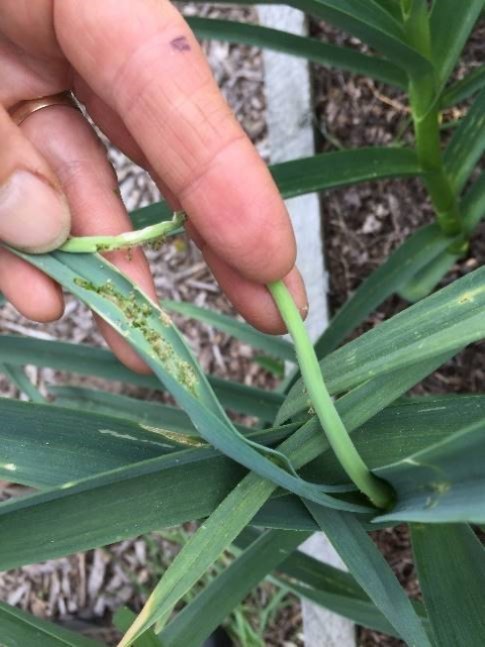 Early leek moth damage to garlic. Unfold the youngest
leaves near the emerging scape to find the damage
and young caterpillars
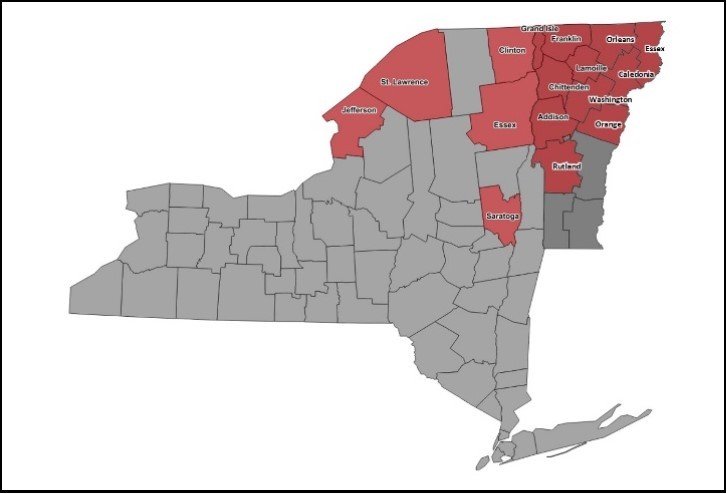
Leek moth is a pest of all allium crops: onions, garlic, leeks, shallots and chives. It is widespread through the southern parts of Ontario and Quebec in Canada, northern NY and in recent years, most of Vermont (see map).
Leek moth overwinters as an adult and begins flying in mid-April. This year the first adults were caught in Essex on April 21, in spite of very cold weather the week prior. The adults seek out alliums on which to lay eggs; emerging garlic and onion seedlings are known to be popular sites. Overwintering onions and emerging chives could be likely hosts for these first egg laying efforts as well. Larvae should be hatching in a couple of weeks.
Be cautious when buying and selling onion transplants between growers in the infested areas. We have seen leek moth appear in new locations when infested plants were brought in from other farms. It is not known in the southern US so seedlings from there should not be a concern for leek moth but caution is advised when buying any northern grown seedlings.
Leek moth larvae can do considerable damage to garlic scapes and this is a good first place to look for them when scouting. Look inside folded leaves near the developing scapes as well. There are 2ee labels for Entrust (organic), Radiant, Lannate and Warrior II w/Zeon. Controlling this first emergence of larvae can help protect onions from the second generation of leek moth which is more difficult to control since the larvae are more protected because they feed inside the hollow onion leaves.
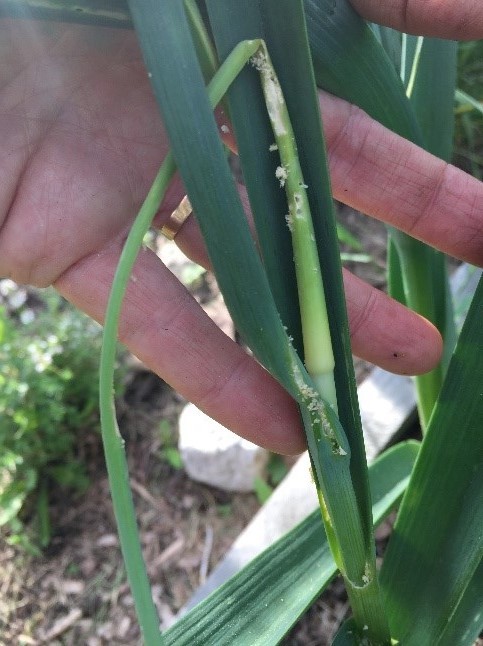 Damage to garlic scape as it emerges


Apples

Apricots

Asparagus

Beets

Blueberries

Broccoli

Brussels Sprouts

Cabbage

Carrots

Cauliflower

Cherries

Cucumbers

Dry Beans

Eggplant

Ethnic Vegetables

Garlic

Grapes

Horseradish

Kohlrabi

Leeks

Lettuce / Leafy Greens

Melons

Nectarines

Onions

Parsnips

Peaches

Pears

Peas

Peppers

Plums

Potatoes

Pumpkins / Gourds

Radishes

Raspberries / Blackberries

Rhubarb

Rutabaga

Snap Beans

Squash - Summer

Squash- Winter

Strawberries

Sweet Corn

Sweet Potatoes

Tomatoes

Turnips

Upcoming Events
Introduction to Small Fruit Workshop

September 21, 2026
Millbrook, NY
Join Cornell Cooperative Extension of Dutchess County for a presentation on small fruit establishment, production, and management with ENYCHP's Berry Specialist Heather Kase!